> For the complete documentation index, see [llms.txt](https://docs.studio.uzu-app.com/llms.txt). Markdown versions of documentation pages are available by appending `.md` to page URLs; this page is available as [Markdown](https://docs.studio.uzu-app.com/top/collection.md).
# コレクション機能
シナリオコレクション機能では、シリーズ作品や企画作品をまとめることができます。
## 設定方法
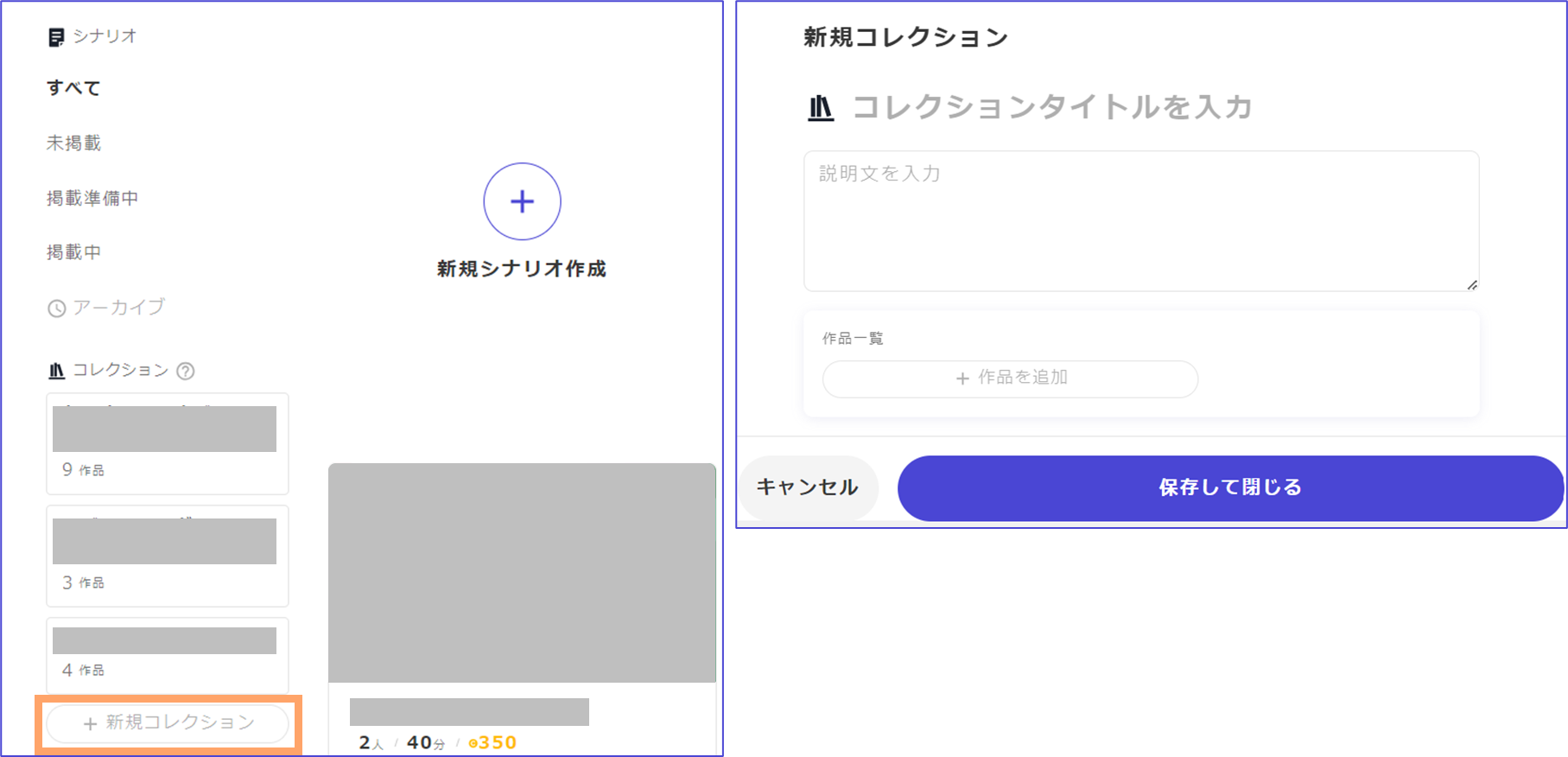
コレクションの設定はウズスタジオのトップ画面(制作シナリオ一覧画面)から行います。
**①左メニューにある「新規コレクション」をクリックします。**
**②コレクションタイトル**(アプリ内の検索でヒットする)**・説明文を入力し、入れたい作品を追加します。**\
**※追加できるのは自分が管理者となっている作品だけです。**
{% hint style="warning" %}
**注意事項**
1つのシナリオを複数のコレクションに所属させることはできません。
「探偵シリーズ」「青春シリーズ」といった一般的な単語をコレクション名に使用したいときは「○○の探偵シリーズ」「青春シリーズ(○○)」のように**他の人の同名シリーズと区別がつくように**設定してください。
既に使用されているコレクション名を入力しようとするとエラーが出るようになる予定です。
{% endhint %}
 ## アプリでの見た目
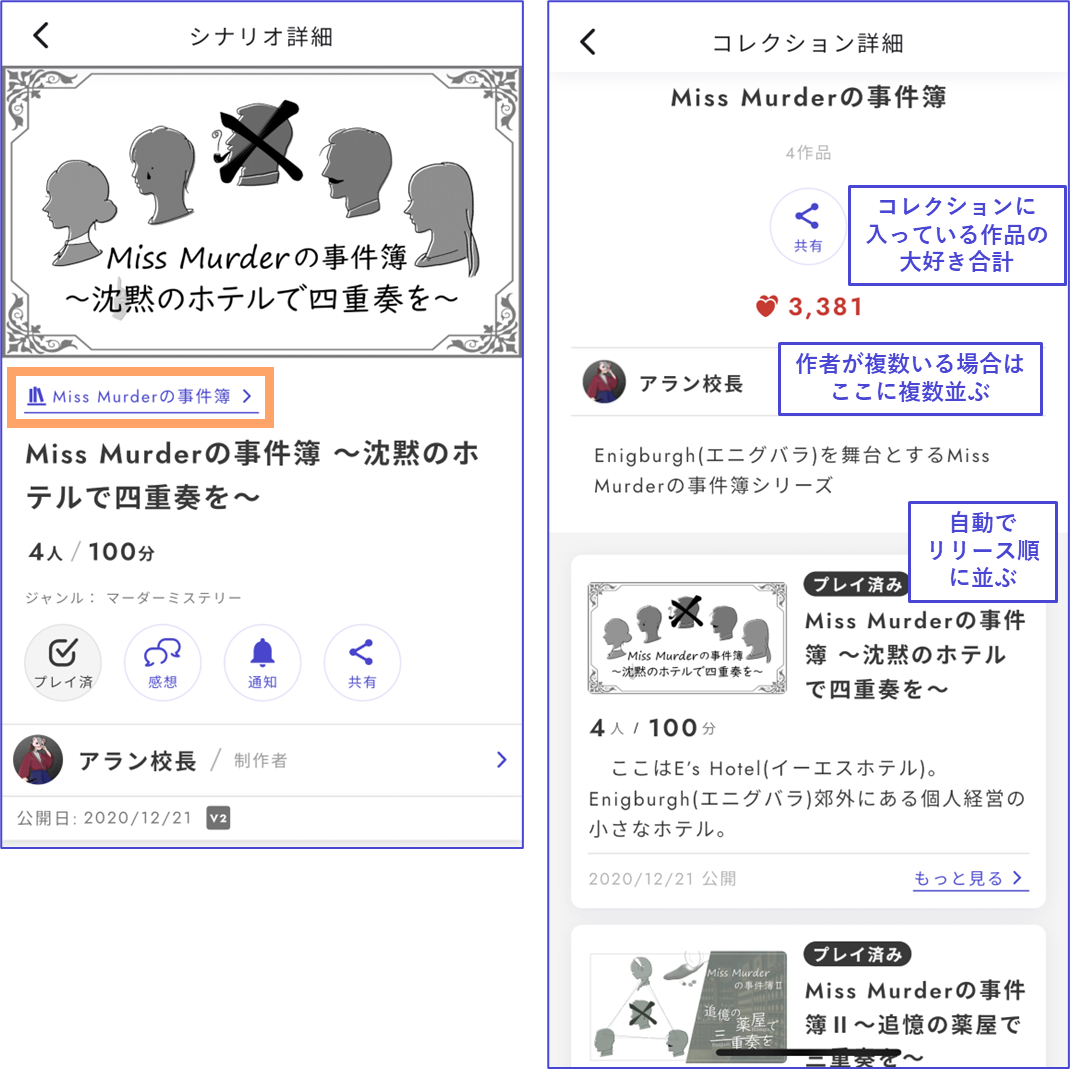
アプリでは、シナリオ詳細画面のキービジュアルの下にコレクション閲覧ボタンが表示されます。
コレクション名をタップするとコレクション詳細を確認できます。コレクション詳細では、「コレクションに入っている作品の**大好き数の合計**」 「コレクションに入っている作品の**作者一覧**」 「**作品一覧**」 が表示されます。
ウズスタジオのコレクション**編集画面での順番に関係なく、作品はリリース順に並びます**。
## アプリでの見た目
アプリでは、シナリオ詳細画面のキービジュアルの下にコレクション閲覧ボタンが表示されます。
コレクション名をタップするとコレクション詳細を確認できます。コレクション詳細では、「コレクションに入っている作品の**大好き数の合計**」 「コレクションに入っている作品の**作者一覧**」 「**作品一覧**」 が表示されます。
ウズスタジオのコレクション**編集画面での順番に関係なく、作品はリリース順に並びます**。
 ## 関連シナリオ機能との使い分け
{% hint style="info" %}
**コレクション機能の使用例**
・シリーズ作品をまとめる
・同作者の同ジャンルの作品をまとめる
・企画作品をまとめる
{% endhint %}
{% hint style="info" %}
**関連シナリオ機能の使用例**
・そのシナリオを遊ぶために前提として遊んでおかなければならないシナリオ(例:シリーズの前作)
・そのシナリオの体験版シナリオ(例:有料シナリオの無料体験版)
・そのシナリオの別バージョン(例:GMあり/なし)
{% endhint %}
**関連シナリオ機能は「内容としては関連のない、単に同じ作者のシナリオ」「無関係な作品の宣伝」にはご利用いただけません。**
作品数の多いシリーズの場合は、関連シナリオに全てを載せるのではなく、コレクション機能をご利用ください。直前の1作を関連シナリオに載せるのは問題ありません。
## 関連シナリオ機能との使い分け
{% hint style="info" %}
**コレクション機能の使用例**
・シリーズ作品をまとめる
・同作者の同ジャンルの作品をまとめる
・企画作品をまとめる
{% endhint %}
{% hint style="info" %}
**関連シナリオ機能の使用例**
・そのシナリオを遊ぶために前提として遊んでおかなければならないシナリオ(例:シリーズの前作)
・そのシナリオの体験版シナリオ(例:有料シナリオの無料体験版)
・そのシナリオの別バージョン(例:GMあり/なし)
{% endhint %}
**関連シナリオ機能は「内容としては関連のない、単に同じ作者のシナリオ」「無関係な作品の宣伝」にはご利用いただけません。**
作品数の多いシリーズの場合は、関連シナリオに全てを載せるのではなく、コレクション機能をご利用ください。直前の1作を関連シナリオに載せるのは問題ありません。